Keeping with the theme of racism in the pagan/polytheist/pantheist ("triple P") communities, I wanted to post the documentary, "White Shamans and Plastic Medicine Men" here.
While this deals a lot with the New Age communities (whom to me want to purchase their spirituality and are not religions like many triple P traditions), it also impacts and touches folks in our communities as well. I am a firm believer in "owning your shit". This is something white triple P people need to address, so here it is, in my blog.
Part One:

Showing posts with label indigenous people. Show all posts
Showing posts with label indigenous people. Show all posts
Wednesday, April 4, 2012


Thursday, March 29, 2012
PPPPOC Speak Out, Part Four
Last year, I encountered some troubling racism within the pagan/polytheist/pantheist communities that wasn't overt, but troubling nonetheless. It got me to thinking that minorities within any community have it hard- even when the community is itself a minority or subculture.
I decided to give my blog over to Pagan/Polytheist/Pantheist People of Color (and later this year to pagan/polytheist/pantheist queers and trans folk) to give them an audience for their experiences. All too often, we traffic only in our familiar circles and that lessens the chance for dialogue. This is a chance to hear from the affected folks themselves.
I sent out a series of questions to folks that I know and it went viral. expect several columns like this one as the answers to my questions come back to me.
This interview is with
. My questions are first followed by hir answers in italics.
|
Saturday, March 24, 2012
PPPPOC Speak Out, Part Three
Last year, I encountered some troubling racism within the pagan/polytheist/pantheist communities that wasn't overt, but troubling nonetheless. It got me to thinking that minorities within any community have it hard- even when the community is itself a minority or subculture.
I decided to give my blog over to Pagan/Polytheist/Pantheist People of Color (and later this year to pagan/polytheist/pantheist queers and trans folk) to give them an audience for their experiences. All too often, we traffic only in our familiar circles and that lessens the chance for dialogue. This is a chance to hear from the affected folks themselves.
I sent out a series of questions to folks that I know and it went viral. expect several columns like this one as the answers to my questions come back to me.
This interview is with TJ Kahn. My questions are first followed by hir answers in italics.
 |
| Mass produced racist valentines. An example of institutionalized racism that people accept... until they don't. |
I qualify myself as a Religious Humanist / Neo-Pagan. I have a mixture of Native American, Zen Buddhist, Judeo-Christian and scientific beliefs umbrellaed under an animistic/pantheistic philosophy.
Can you tell us how you identify as a person of color?
I identify as a Latino/Native American (First Nations) person. (Of Mexican-American and Mission Indian descent.)
Do you identify with the term "pagan"? Why or why not?
I identify with "Neo-Pagan" because it is the only term that encompasses all of me, but I rarely identify with the larger Earth-centered Pagan community, though I hold them in great respect.
Have you ever encountered what you consider racism (however you define it) while at a pagan gathering, circle, or workshop (public or private)? Can you tell us what happened?
 |
| Holy cats, this one is bad. |
Do you believe that there is a bias against any traditions/Gods/types of religious practices in the greater pagan community? Do you believe that these biases are informed by racism?
As above, there have been very little references to my particular ancestry, and larger pagan gatherings tend to ignore my particular patrons (Athena, Bast, Thoth) in favor of larger Gaea-deities. (Blue Man, Earth Mother, Pan, etc.)
What would you like to tell white pagans about making spaces more welcoming, inclusive, and "safe"?
Host more Native American animistic teachers.
Have you had conversations with "white" pagans about race? Did it go well? Do you feel as if you were heard?
Not about race. I've usually felt heard pretty well in the pagan community.
 |
| The term "Indian Giver" is particularly infuriating. Look up the history if you do not know. |
I tend to see a plethora of Native American practices used in pagan ceremonies like smudging and dreamcatchers, but almost none of the other less-popular traditions like medicine dances and sand paintings. I would say more 'commercialized' rather than 'appropriated'.
Anything else you would like to speak to?
I would like to see more respect given to the ground and ancestors of the particular area where pagan practices are being held. Not from an Earth-Mother perspective, but respect for whose land that used to be.
For more information on dismantling white privilege, race in the news, and anti-racist activism, check out:
and more links to come.
Sunday, March 18, 2012
PPPPOC Speak Out, Part Two
Last year, I encountered some troubling racism within the pagan/polytheist/pantheist communities that wasn't overt, but troubling nonetheless. It got me to thinking that minorities within any community have it hard- even when the community is itself a minority or subculture.
I decided to give my blog over to Pagan/Polytheist/Pantheist People of Color (and later this year to pagan/polytheist/pantheist queers and trans folk) to give them an audience for their experiences. All too often, we traffic only in our familiar circles and that lessens the chance for dialogue. This is a chance to hear from the affected folks themselves.
I sent out a series of questions to folks that I know and it went viral. expect several columns like this one as the answers to my questions come back to me.
 |
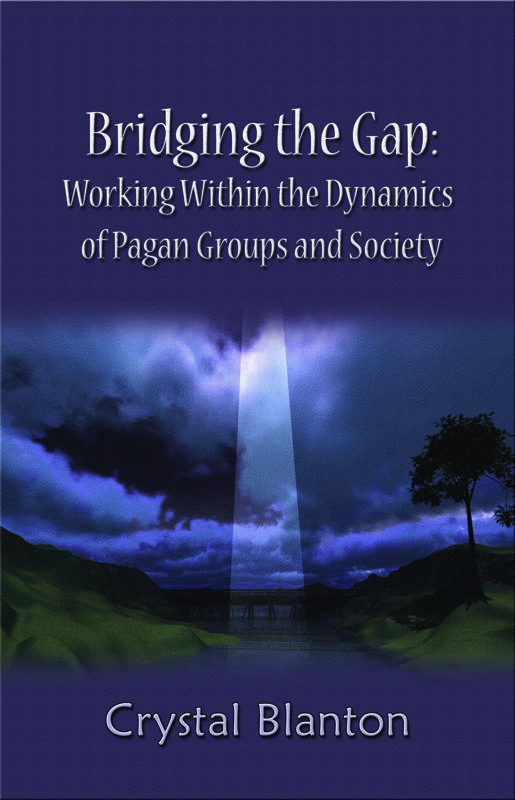
| Both the books shown here are available through Crystal's website. |
Can you please tell us how you identify religiously/spiritually?
I identify as a Wiccan/Pagan.
Can you tell us how you identify as a person of color?
I am a Black (African American) woman. That is how I identify if I were to strip it down to one over arching label but I am also mixed with other things, as most of us are.
Do you identify with the term "pagan"? Why or why not?
I do identify with the term Pagan because it is a label that encompasses the elements of my spiritual practice. As a person that works with the old deities, elements, forces of nature and works within the concepts of earth based spirituality, I find that Pagan is a good umbrella term that identifies my spiritual beliefs and practices.
Have you ever encountered what you consider racism (however you define it) while at a pagan gathering, circle, or workshop (public or private)? Can you tell us what happened?
I recently encountered a man in a Pagan meet and greet that made some racist comments to me about Black people in Oakland. He referred to his children as "sagging" their pants and made a comment that he immediately told them they were not black. He then went on to ramble about black kids who are shot every week because they are on the corners selling marijuana and then are chased by the cops. He states they were shot because when running they had to pull up their sagging pants and therefore were shot by the cops because it looks like they are reaching for a weapon. I wrote about this experience in the Daughters of Eve blog...
I do believe there are a lot of fears about deities and other beliefs that are not common within the Euro-centric concepts of Gods and Goddess. Venturing out to understand the African Gods appear to be quite frightening for many who are practicing Pagans and are within the common box of working with only Celtic or Greek Deities.
What would you like to tell white pagans about making spaces more welcoming, inclusive, and "safe"?
I think there are many things that could be said to those who are not balancing the line of being the minority race within the Pagan circle. I would mention here the concept of privilege and developing a great understanding that not everyone has the same outlook and experiences in life. Due to these differences, it is important to acknowledge that diversity gives us perspective that we may not otherwise have. Evaluating ones privileged opens up the opportunities to see how others views are valuable and also seeing ones on limited understanding of the many ways of the Gods. Honoring each person as an individual and a child of the Gods goes a long way, regardless of the color of a person's skin.
Have you had conversations with "white" pagans about race? Did it go well? Do you feel as if you were heard?
I have had many conversations about race with non-minority Pagans. While some went very well, not all conversations have gone without a hiccup but all conversations are progress. I do feel heard many times and being able to work with the Daughters of Eve blog on Patheos or with the Shades of Faith; Minority voices in Paganism anthology has given me even more outlets to be heard through. It is an exciting time within our spiritual community.
Do you have anything to say about appropriative spirituality? Has your tradition been appropriated?
No.
For more information on dismantling white privilege, race in the news, and anti-racist activism, check out:
Daughters of Eve
Beyond Whiteness
Understanding and Dismantling Privilege
Colorlines
Race Traitor
Trans Griot
What Tami Said
Racialicious
and more links to come.
Saturday, March 3, 2012
PPPPOC Speak Out, Part One
Last year, I encountered some troubling racism within the pagan/polytheist/pantheist communities that wasn't overt, but troubling nonetheless. It got me to thinking that minorities within any community have it hard- even when the community is itself a minority or subculture.
I decided to give my blog over to Pagan/Polytheist/Pantheist People of Color (and later this year to pagan/polytheist/pantheist queers and trans folk) to give them an audience for their experiences. All too often, we traffic only in our familiar circles and that lessens the chance for dialogue. This is a chance to hear from the affected folks themselves.
I sent out a series of questions to folks that I know and it went viral. expect several columns like this one as the answers to my questions come back to me.
This interview is with Preston Eclipse. My questions are first followed by hir answers in italics.
 Can you please tell us how you identify religiously/spiritually?
I identify as a witch/priestess/gatekeeper. Specifically, I am a Reclaiming Tradition Witch whose cosmology in deeply rooted in Evolutionary Spirituality.
Can you tell us how you identify as a person of color?
I usually call myself Black (race) when people ask my ethnicity(ies) I break it down as having one parent who is Cape Verdean [which is an African-Portuguese Creole] and another parent who has African-American and Wampanoag Indian ancestry.
Do you identify with the term "pagan"? Why or why not?
I prefer Witch. Pagan seems too much of an umbrella term. It's original meaning refers to people who live in the countryside. Now it's a diffuse term to describe all religions that are not Abrahamic. I don't use it that often because I feel that it implies these spiritual traditions are too unimportant to be acknowledge by their self-identified names and practices. I do sometimes find it a useful point of entry into these types of conversations. However, it is not the destination.
Have you ever encountered what you consider racism (however you define it) while at a pagan gathering, circle, or workshop (public or private)? Can you tell us what happened?
I've encountered cultural appropriation such as not naming of giving due credit to where a particular practice has come from (especially indigenous practices) I think that without naming where a particular ceremony or part of a ceremony comes from and then explaining to the ancestors/wisdom holders of that tradition and to those that are participating that your intentions are not to commercialize, appropriate or purposefully distort the practices then it's perpetuating colonialism. I have also witnessed discounting diversity and large scale assumptions that all participants are of European descent. For example, during a Samhain Ritual planning meeting at a university some of the other planning members suggested we all paint ourselves in blue woad like our ancestors did-ignoring my physical presence there as a person of color and assuming everyone that would be involved had ancestors who painted themselves in woad.
 Do you believe that there is a bias against any traditions/Gods/types of religious practices in the greater pagan community? Do you believe that these biases are informed by racism?
I have seen a bias against traditions of the African Diaspora that incorporate animal sacrifice or animal parts. I have even heard racist remarks such as that type of "primitive ritual scarifice" isn't necessary anymore. It does appear to stem out of the moral high road of the techno-industrial west, which knows better and does better than the "developing countries". There may be actual concern regarding animal rights however it is couched in ignorance regarding the social, economic, and religious structures and cosmologies of these spiritual traditions and their communities.
What would you like to tell white pagans about making spaces more welcoming, inclusive, and "safe"?
Please be very aware of the lense of your own experience and how it colors your perception. Having that awareness can minimize the hurtful effects of assumptions, ignorance, and covert/overt bigotry.
Have you had conversations with "white" pagans about race? Did it go well? Do you feel as if you were heard?
I've been fortunate to have salons with people in my traditions to discuss race, genders, sexual orientations and I have been unexpectedly satisfied. There is more work to do, however the collaboration thus far seems promising. I did feel heard/seen/valued.
Do you have anything to say about appropriative spirituality? Has your tradition been appropriated?
I am a witch of Reclaiming Tradition and also resonate deeply with its sibling the Feri Tradition. It is an ecstatic tradition that draws on inspiration and wisdom from numerous historic and living traditions. I am often cautious that while I share in the wisdom of our global village I must give something back in addition to honoring the original sources so that I can minimize appropriation.
For more information on dismantling white privilege, race in the news, and anti-racist activism, check out:
Beyond Whiteness
Understanding and Dismantling Privilege
Colorlines
Race Traitor
Trans Griot
What Tami Said
Racialicious
and more links to come.
I decided to give my blog over to Pagan/Polytheist/Pantheist People of Color (and later this year to pagan/polytheist/pantheist queers and trans folk) to give them an audience for their experiences. All too often, we traffic only in our familiar circles and that lessens the chance for dialogue. This is a chance to hear from the affected folks themselves.
I sent out a series of questions to folks that I know and it went viral. expect several columns like this one as the answers to my questions come back to me.
This interview is with Preston Eclipse. My questions are first followed by hir answers in italics.

I identify as a witch/priestess/gatekeeper. Specifically, I am a Reclaiming Tradition Witch whose cosmology in deeply rooted in Evolutionary Spirituality.
Can you tell us how you identify as a person of color?
I usually call myself Black (race) when people ask my ethnicity(ies) I break it down as having one parent who is Cape Verdean [which is an African-Portuguese Creole] and another parent who has African-American and Wampanoag Indian ancestry.
Do you identify with the term "pagan"? Why or why not?
I prefer Witch. Pagan seems too much of an umbrella term. It's original meaning refers to people who live in the countryside. Now it's a diffuse term to describe all religions that are not Abrahamic. I don't use it that often because I feel that it implies these spiritual traditions are too unimportant to be acknowledge by their self-identified names and practices. I do sometimes find it a useful point of entry into these types of conversations. However, it is not the destination.
Have you ever encountered what you consider racism (however you define it) while at a pagan gathering, circle, or workshop (public or private)? Can you tell us what happened?
I've encountered cultural appropriation such as not naming of giving due credit to where a particular practice has come from (especially indigenous practices) I think that without naming where a particular ceremony or part of a ceremony comes from and then explaining to the ancestors/wisdom holders of that tradition and to those that are participating that your intentions are not to commercialize, appropriate or purposefully distort the practices then it's perpetuating colonialism. I have also witnessed discounting diversity and large scale assumptions that all participants are of European descent. For example, during a Samhain Ritual planning meeting at a university some of the other planning members suggested we all paint ourselves in blue woad like our ancestors did-ignoring my physical presence there as a person of color and assuming everyone that would be involved had ancestors who painted themselves in woad.
I have seen a bias against traditions of the African Diaspora that incorporate animal sacrifice or animal parts. I have even heard racist remarks such as that type of "primitive ritual scarifice" isn't necessary anymore. It does appear to stem out of the moral high road of the techno-industrial west, which knows better and does better than the "developing countries". There may be actual concern regarding animal rights however it is couched in ignorance regarding the social, economic, and religious structures and cosmologies of these spiritual traditions and their communities.
What would you like to tell white pagans about making spaces more welcoming, inclusive, and "safe"?
Please be very aware of the lense of your own experience and how it colors your perception. Having that awareness can minimize the hurtful effects of assumptions, ignorance, and covert/overt bigotry.
Have you had conversations with "white" pagans about race? Did it go well? Do you feel as if you were heard?
I've been fortunate to have salons with people in my traditions to discuss race, genders, sexual orientations and I have been unexpectedly satisfied. There is more work to do, however the collaboration thus far seems promising. I did feel heard/seen/valued.
Do you have anything to say about appropriative spirituality? Has your tradition been appropriated?
I am a witch of Reclaiming Tradition and also resonate deeply with its sibling the Feri Tradition. It is an ecstatic tradition that draws on inspiration and wisdom from numerous historic and living traditions. I am often cautious that while I share in the wisdom of our global village I must give something back in addition to honoring the original sources so that I can minimize appropriation.
For more information on dismantling white privilege, race in the news, and anti-racist activism, check out:
Beyond Whiteness
Understanding and Dismantling Privilege
Colorlines
Race Traitor
Trans Griot
What Tami Said
Racialicious
and more links to come.
Monday, October 11, 2010
Subscribe to:
Posts (Atom)