Showing posts with label Daily Practice. Show all posts

Tuesday, October 19, 2010

Tangible Witchcraft: Meditation and Prayer

Most religious witches that I know and respect have a sitting practice as well as a prayer practice.
Many newbies to witchcraft are surprised by this, thinking that sitting (meditation) is a Buddhist practice and prayer belongs to the Judeo-Christians. I have heard a ridiculous amount of times on the internet that "witchcraft is a craft, not a religion", which is a generalization that only applies to a percentage of all the witchcraft traditions out there. So please folks, stop saying that- it is not true across the board!

People have been praying and meditating across the globe long before the "Big 5*" religions came to be. Indigenous/pagan cultures have been praying and meditating for quite some time.

When I first started studying Feri, breathing and sitting were the first concepts introduced by my first teacher, T. Thorn Coyle. Her beginning Feri classes (which lasted a little over two years) emphasized self-discipline and mastery of the Self, with the ultimate desired result being a strong powerful witch. For that framework, I am truly grateful. She emphasized the goal of becoming self-possessed, which she described then as "being familiar with all our parts and not letting them control us".

Most religious traditions worth their salt have this as a goal- self gnosis leading to interactions with the world(s) in a much more powerful and respectful way. Iron** (the work of self alchemy) leads to Pearl** (the work of building beyond yourself, connection).

Thorn's way of sitting, which she called "GodSoul listening", was similar to Buddhist Vipassana practice. You notice things as they arise, and do not judge yourself for having thoughts. Often the things that arise, particularly if they are non-verbal are messages from GodSoul*** or Fetch***. I took to writing down what I experienced and still find them helpful in hindsight.

At first, I found sitting daily for 20-30 minutes unbearable. Now I find it unbearable if I do not do it for a while. I get cranky and quick to flare with emotions before I am even aware that they are happening. Sitting makes me a much more aware person (and therefore easier to deal with!).

Prayer is equally important, and the most common prayers in Feri are to one's own GodSoul. There are so many of these, the Ha prayer, the Flower Prayer, but one of my favorites is from Cora Anderson, whose Christian upbringing (which she folded into her Feri practice) and Appalachian common sense shines through in this work:
I believe that we are three souls in one body

And that you are the highest, best, and most perfect part of me

Give me what I need each day

Keep me from evil, though it be the very thing I pray for

And bring me to the good even though from ignorance I don't know enough to ask for it.
Gods, I miss Cora. Seeing her every week really was a way to ground myself in Feri teachings and care for a beloved elder at the same time.

Orion Foxwood, founder of the Faery Seership Tradition (which I find to have eerily similar theology to Feri, plus a charming sexy man leading the way to boot!) said in a workshop I attended once, "A good witch listens (sits) and talks (prays) every day."

Of course, we also offer devotions to Gods we work with as well- but often my devotions to them are wordless- such as altar offerings or art. But many pagans I know pray to their patrons and Gods that they work with as well.


*Big 5= Judaism, (Protestant) Christianity & Catholicism, Buddhism, Hinduism, and Islam. In California (where I live) prisons, only clergy from the big 5 that I mention are allowed access to prisoners.

**Iron and Pearl Pentacles. These are tools of alchemy unique to the Feri tradition and a couple of its offshoots.

***Fetch, Talker, and GodSoul are names for the three parts of a human soul in Feri.

Tuesday, September 21, 2010

New Classes That I Am Taking!

I just started my new semester at seminary, and am taking two classes this fall. I have a liturgy writing class on Mondays called "Writing the Rites" that will undoubtedly make an appearance here in the blog. And my other class, Sex and Spirit, is on Thursdays! I wanted to share a bit, after all, sex and religion is a powerful mix!
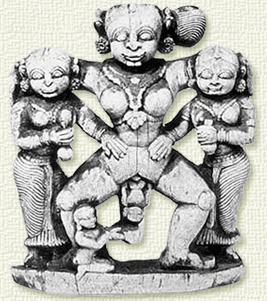
birth.gifIn Feri, Sex is considered the life force that connects all living things, and it is the origin of the universe (not just genital sex, but it includes that, too). Sex is not always about procreation, rather it is about creation of all kinds, be it of another human being, a work of art, a good orgasm, or an ecstatic experience. In Feri, there is no shame in sex- and there is no guilt, either. Sex is a good healthy thing, when consensual.
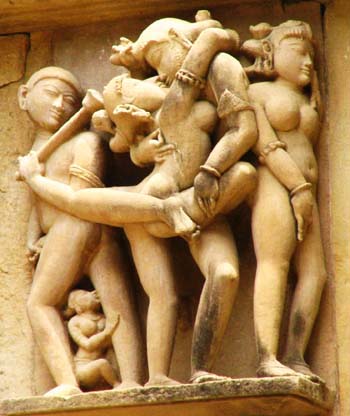
But I know that other religions have their issues with sex for whatever reason and often have prohibitions on what kind of sex one is allowed to have (if any), when you can have it, and with whom. That is why I am glad to be in a class with people from diverse religious and cultural perspectives. I am glad to see that future clergy of many denominations and traditions will be sex positive.


As a future priest and present parent, the messages that I transmit about sex to those around me matter. Sex is a normal bodily function and a part of creation. I want my son growing up embracing his human birthright to have sex and hold it as sacred, as a gift.  I want him to get pleasure from his body as is his right. I want him to know the names of all his body parts, and the names of other body parts he does not possess. As a young girl, I was not told the names of all my body parts, and had to learn about sex mostly on my own. I already have a great children's book for Rowan when he gets a little older called a Kid's First Book About Sex. He will learn anything he wants to know, and he will get information without having to ask. Teaching him about sex will be like teaching him about art, math, or insects. It is a commonplace thing, and happens to almost everyone in their life.

About the class (from the syllabus):

If we want to bring our whole selves into connection with Spirit, we can’t forget our sexual selves. In this class, we will explore the effects of erotophobia on sexuality and, by extension, spirituality in order to discover how we can integrate these foundational aspects of our humanity. Some topics we will discuss include: sexual well-being, the effects of shame on relationships, sexual diversity, how our sexual selves can inform our spiritual practices, and the dance between boundaries and connection with others. The class will include lecture, interactive exercises, group discussion, and personal reflection in order to offer a range of perspectives and experiences.

erotic-india-sex.jpeg
Course objectives: By the end of the course, you will be able to:
  • Discuss how sexual well-being, shame and interpersonal boundaries influence and are influenced by their relationships with the Divine.
  • Identify and commit to at least one step they can take to deepen their understanding of sexual diversity and overcome erotophobia.
  • Explore ways in which their personal sexualities can both inform and hinder their roles as ministers.

Sound good? So far, it is! My professor for the class is an old friend, actually- Charlie Glickman. We worked together at Good Vibrations, among other things, back in the day.

I'll be journaling for the class and posting some of those entries here. For homework for our first class, he asked us to write about this:
What messages have you received about sex and spirituality? How have those messages shaped your studies? Your spiritual journey? Your daily life?


Interesting questions for me to ponder. How about you?


If all goes according to plan, I should become a better, more creative writer in the next 14 weeks: "Writing the Rites" is my way of getting up to snuff in the writing department.

Technically, it is a liturgy writing class for wannabe Unitarian Universalist ministers. But what is liturgy if not creative writing for religious thinkers? And not just "the big 5" have liturgy. My religious tradition has gorgeous liturgy written by poets more talented in that arena than I. But I aspire, and in order to succeed, work is to be done! We will be writing as a daily practice, checking in with a writing partner weekly on top of class time, and checking in monthly with the professor about our journaling. I am looking forward to honing my skills!

We started the class by doing some automatic writing and (gulp) sharing it in front of the class - twice. I took a chance and made myself vulnerable, exposing personal details about my life. It's going to be an interesting semester, I think!

From the syllabus:
I. Description:
This course will provide religious leaders with tools to create meaningful, multi-vocal worship in the UU congregational setting. In class and in the community we will be creating and leading traditional and transformational worship for people at all ages and stages. Students will gain and understanding of the psychology and spirituality of ritual and liturgical forms within an historic context. In addition to the Sunday service, we’ll create a calendar and write ceremonial rites to prepare for the leadership of weddings, memorials and other special religious occasions.
II. Course Aims and Learning Objectives:
Aims
This course will include a lot of writing. In and between sessions students will be writing for the various elements that make up Sunday services, and traditional rites of the Unitarian Universalist community. Students will explore the necessary rhythms of writing for professional sustainability.
Students will share their writing with others and be expected to offer, and receive, affirmation and critique. We will create a community of hope expressed in written and spoken words.
Learning Objectives:
By the end of this course, students will: •Have a portfolio of writing samples for various religious
occasions; •Understand the history and intentions of various liturgical rites and
increase in their confidence and ability to lead congregations
through familiar and new rituals; •Be able to adapt written material from a variety of sources with
attention to the integrity of the original and the issues of
appropriation and fair use; •Find meaningful tools for incorporating writing into a public and
pastoral ministry.
I'm looking forward to creating some gorgeous litugy for Feri rituals in this class!

Sunday, May 9, 2010

Learning About My Son

This post is from my previous, now defunct blog.
Original post date: Sunday, May 9, 2010


In most of the religious traditions that resonate with me, deep and meaningful spiritual practice depends on “being present”: living in the moment, realizing that THIS moment is really all we have. This practice of mine used to be so much harder than it is now. My son has helped me to remain present more often than a daily sitting practice ever used to.

When we are together, I am constantly checking in with him emotionally and energetically to suss where he is and what he needs in that moment. And while I may have “plans” for my day or evening, if my son “derails” them, I am not as upset as I have been in the past when someone else has derailed my schedule. Being present in the moment is my main priority and goal for the day, everything else takes a back seat. It has meant opting out of some fun things, taking an incomplete this semester (in which I am struggling to catch up as we speak), and looking a lot more flakey than I ever used to (and man, do I hate flakes!). And you know what? It doesn’t matter. What does matter is that my son is well loved, attended to and learned about each and every day.

My attentiveness has been rewarded. As his personality is unfolding, I am learning more and more about this tiny human and what he will be like.

My son is shy. He prefers small intimate gatherings to large boisterous ones. He is curious, but only so not when overwhelmed by stimuli. He likes meeting new people, but usually one at a time and he likes to have mama or daddy nearby when it happens. He likes staying at home and exploring things slowly.

He is energetically quite sensitive, and picks up all sorts of things from people. When confronted with people with crazy, tweaky, or angry energy, he moves inward. His eyes unfocus and he retreats. He uses this coping skill in large crowds as well. He has learned to go internal when facing uncomfortable people or scenarios- where did he learn that? I always thought these tendencies (as well as being an extrovert or introvert) were socialized, learned behaviors. But these appear to be “how he is”, as if he were born that way.

These things make him appear rather boring to the large crowds that have met him at Beltaine, Pagan Pride, and PantheaCon. But nothing could be further from the truth. While he is still developing who he will be, I can assure everyone he is fascinating, quite smart, and engaging. You just have to meet him on his terms!