Showing posts with label Religion. Show all posts

Tuesday, May 28, 2013

Religion versus Spirituality: What a Crock!

The annoyance came to me while on Facebook. This picture (to the left), posted by a couple people on the same day, right on the heels of a debate that I had (in a small group of pagan-esque seekers) about cultural appropriation in spiritual practices.

In the debate, one particularly offensive member of the group misquoted Crowley (stating, "do what thou wilt" as a way of saying- "appropriate away, if it works for you".) I cringed, then took on that issue. And took it on, and took it on, and took it on.

Because the idea that we are ENTITLED to whatever we are attracted to is pervasive in this culture- and people fight to keep that "entitlement". No one wants to believe that they are being racist or some similar ism.

It has been couched as the "religion versus spirituality" debate. But that is a false trope.

The media tells us we "deserve" what we desire through news, commercials, and entertainment. Most people in the United States (and elsewhere) actually believe it. (If you can afford it, that is. This is why I think cultural and spiritual appropriation are so commonplace in the US- it's essentially low cost or free (monetarily speaking)- so anyone can do it.) But theology is not for sale. Anyone telling you otherwise is a religious profiteer. These folks are usually selling you a book, a workshop, or something from their pagan shop most of the time, ever notice that? How convenient eclecticism is for these folks who have something to sell- there's always a new product line!

It is my experience that people who appropriate other people's spiritual practices, cherry picking this and that without deep understanding of historical or theological context (and studying those traditions in depth for quite some time) are hella defensive about their "practices"- defending them by calling names ("bullies" or "elitists") on those who would call them out on their offenses.

So people fight me on this point A LOT:
"It works for me."
"Who are you to criticize someone else's spiritual practices?"
"Each path is individual! You do what works for you, I'll do what works for me."

Do you notice any commonalities in those statements? The common thread is ME ME ME.

From my original Facebook rant:
The word religion actually means "to retie" and the function of religion is to retie a person to everything else. It's about connection (for my religion, it re-ties me to other creatures (including humans), other living beings (plants, non-corporeals), and the land. 
Spirituality is about individualism "I do this, this works for ME". It is about the individual (which is why it works so well in capitalist systems- everyone is looking for the shiny new thing right out of the package. This works well for Deepak and all the other capitalist gurus out there, be they New age, pagan, or otherwise.)  
People who insist on only doing things THEIR WAY never advance spiritually. They pick things that are comfortable. Religion isn't about comfort- it's about connection. And damn if that isn't uncomfortable some days (anyone who takes public transit knows what I mean.)
I call bullshit on individualism wrapped up in a "spiritual" package.

Irresponsible eclecticism is cultural appropriation. It is white supremacist thinking (regardless of who individually is appropriating). It is capitalism** applied to theology. Which I also call "New Age"- because New Age is about providing a product or service, for a cost, to address your "spiritual need". It's the "take a pill" mentality.

And make no mistake, Deepak Chopra is all about New Age thinking. He profits wildly from "spiritual" capitalism pumping out feel-good platitudes that challenge no one. Because again, spirituality is not about challenge. It's supposed to make you feel good about what you are already doing or not doing. It may inspire a new hobby or interest- but only so far. "Spirituality" is for dabblers.***

This picture's sentiment irritates the crap outta me, particularly in pagan circles. We should be better than this. Our ideas, theologies, holidays, and more were appropriated by folks that wanted to convert or exterminate us. And we do it to others? No, I say. And I will speak out when I see it happening.

Deepak is so fucking wrong- the quote is just plain wrong. Religion is a set of traditions but it does not exclude personal experience at all. There is room for gnosis in religion. And religion does not *have to* include belief. My religion does not need belief, as I have experience and deep gnosis that tells me what is true. Deepak is being reactionary and throwing the baby out with the bathwater (for a tidy sum, I'll add snarkily).

"Spirituality", on the other hand, is a watered down term that is basically meaningless because there is no specificity. It could be anything. Just like that term "pagan".


*It should go without saying (but because this is the internet, I will say it anyway to avoid assumptions on the part of a reader) not ALL authors, shop keeps, or teachers are cultural appropriators (or even eclectics). Many are deeply rooted in a specific tradition and do the work of their calling. But beware of eclectics and dabblers who ride the latest wave of shiny (This week, traditional craft! Last week: conjure!). They have no substance.

** I can criticize capitalism for multiple blog posts in and of itself, but for the sake of this post, when I say "capitalism" think, "making money off of anything and everything possible- including ideas and other living creatures".

***There is nothing wrong with dabbling. I have dabbled in plenty of things. But call your "practice" what it is. Dabbling does not a complete theology make. Dabbling does not lead to mastery. And that is what a true religion does- religion is designed to make us masters of ourselves. And that means tackling the hard stuff.

Sidebar: I understand that many criticisms of religion (ie. "organized religion" or abrahamic religion, or even more narrowly, Christianity) come from people eschewing all organization and structure. They do this because they have been stung by hierarchy. Shit, we ALL have. But that approach is foolish.
Structure and hierarchy are not the same thing. (Shit, even the word hierarchy has been co-opted. It doesn't have to mean "unilateral power over people and things". It simply means "structure" too. ) And ALL living things need to have a structure to survive and thrive.  Folks who have valid criticisms of systems of power and their abuse owe it to themselves and the struggle to know what it is that you are criticizing and to be specific about it.

Thursday, May 31, 2012

Church is Everyday

Yay, Steven Colbert. A Catholic.
So I started my job at a Director of Religious Education at one of my local UU churches. I am working almost every day getting up and running as a DRE, and it got me to thinking about that peculiar Judeo-Christian habit of "doing church" (or schule) once a week. After all, a lot of my weekly workload is gearing up for a big to-do on Sunday that includes others -in worship services or in class.

Most of the time when I have felt particularly spiritual or religious (see my earlier definition of religious to see why I equate them), it has been when I have a daily anchor in my life- a practice of sitting, devotion, a spell that needs tending daily, etc. And in all those activities, I am an active participant, not a passive observer. Yet the idea of church/schule is where we "participate" with attendance- perhaps singing along or call and response, but often never crafting the worship service per se. After all, in Judeo-Christian traditions, we have clergy for that.

FAIL.
 In my Witchcraft tradition, if you are an initiate you ARE clergy, and if you are not initiated then you have yet to become a part of the tradition. So I have a unique perspective coming to all of this, I realize. (Perhaps I sought out such a tradition because of my personal needs- in order to stay clean/kala and centered/aligned I actually need a daily anchor. Perhaps it is a weakness. But I find that if I do not have this anchor, I tend to get caught up in the mundane world and its trivia, people are their drama, and all sorts of things that aren't actually important.)

So the idea of just attending worship services weekly has never struck me as particularly religious (again, see my definition). Perhaps that is why I was drawn to UUs (and Quakers, among other religions other than my own) in the first place. While they meet weekly, it is more of a "touchstone" practice. They do the work of church throughout the week- focusing on social justice matters and building community Monday-Saturday, and then come together to celebrate and meditate together on results and work yet to be done on Sunday. Or at least the places that I have attended seem to do that.

It got me to thinking. Church really is every day. To "do church", one needs to have a commitment that extends beyond the "showing up phase" on Sundays and gets into a daily or every few days regularity. Church is a framework- a lens with which we see the world and a tool with which to bless it. Time to go to church.


Sunday, February 5, 2012

Religion in the News

Here's a roundup of interesting religious news from around the world!

Agtivist Adam Berman combines his Jewish faith with urban farming for a wonderful, sustainable combination.

Infamous African "Witch Hunter" may get permission to visit the US and preach, despite human rights violations and objections. The Facebook page rallying against her entry is here. Here is a website fighting her work and saving children in Nigeria.

Atheist activist Alain de Botton believes there should be an "atheist temple" in London. Makes sense to me- everyone needs connection and community!

Newt Gingrich calls Gay Marriage a "pagan behavior". I agree!

Tuesday, August 16, 2011

Extremism worldwide

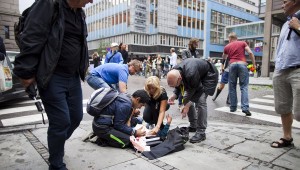
Oslo
The world is a scary place right now, is it not? Terrorists, extremists, polarized politics, and violence plague us. People are blaming one another for problems and not working together for the benefit of all.  People are rioting and looting because they feel like they have no options in life. And in many ways in the culture that we have developed in "western, industrialized" countries, this is true. The gap between wealthy and poor has been widening for decades. More and more people are hungry and uncared for.

London
This inequality has lead to revolutions and protests in Syria, Egypt, Wisconsin, Michigan, Spain, Greece, London, and Manchester. (I am sure that there are more than this short list.) I believe that this economic situation has created terrorism and extremism. Here in the US, the threat for homegrown terrorism is higher than it has ever been, due to gaps in equality, extremists taking advantage, and the rest of the population living in a state where they value competition over cooperation.

Spain
I know that many blame religion, but extremism of any stripe can step in when people feel powerless. The attack on Norway was done by a Christian extremist- yes, but more than that, he was afraid of what a pluralistic socity would mean for him- he thought it meant losing what little power he did have. The attacks on the World Trade Center and Pentagon were done by Muslim extremists, yes. But in reality, religion has little to do with these attacks. The attacks on US soil targeted centers of global oppression- big finance and US colonial military power.

Wisconsin
Further, these kind of attacks stem from a place where people feel that their way of doing things trumps everyone else's. The Oslo Bomber feared Muslims and their culture and wanted them exterminated, deported, or violently assimilated. The mere existence of "others" (simply being) is a threat to him. He hated the "cultural marxists and multiculturalists" who are "aiding and abetting" cultural genocide (most significantly in efforts to accommodate Islam within Europe). The challenge, as [Anders Behring Breivik] sees it, seems to be to eliminate Islamic migration to Europe, assimilate or force emigration of Muslims, and to excise all Islamist or Arab influenced culture, art, and architecture from European countries.

So what can we do? We can say no and we can say yes.

Say No to a Culture That Embraces Violence and Hates Difference
Did you know that in our (broken) popular culture video games ) the ones that we often let our kids play) helped the Oslo bomber prepare his horrible plot? We are desensitizing ourselves to violence and death and helping others learn how to kill effectively when we allow such "games" in our homes.Violent video games in my home? Hell no.

I have a friend whose sons (all under the age of 6) play these with their father (as well as watch violent TV and cartoons) and all they want to do is play fight. They always polarize their toys (This is the bad guy- I am going to kill him!") and it makes me sad and frightened all at the same time. These kids also have nightmares inspired by what they see. I want something different for Rowan- and that is going to be hard, because I am swimming upstream, against the tide of a culture that sees violence as mainstream and OK.

I also choose not to have a TV in my home, because I feel most of the programming is designed for brainwashing us to believe competition is better than cooperation, capitalism is freedom, violence is normal, and difference is something to be despised. I do not want my son exposed to those dynamics at a young age. When he is older, we will watch together, so that I can help decode the messages that he is seeing. I want to raise a critical thinker.

I am also saying no to a segregated society- I want to have friends of all ages, races, religions and other cultural markers of difference. I want my son to grow up in that world, so I need to actively cultivate it. which brings me to saying yes:


Saying Yes to Diversity, Cooperation, and a Culture That Sustains Life
After the Oslo bombing, Al Jezeera ran an op-ed called, Faced with Inhumanity, We Must Be More Human. I concur. While we are afraid, we must continue to reach out to one another and build a new society in the decaying shell of the old. We must learn how to care for ourselves and others we include in our tribe (and we must build those tribes!) Hard work is ahead for all of us that value life and love.

We must go out of our way sometimes to meet people who think or live differently than ourselves. Making friendships that span that divide is even harder. But if we want a society that embraces diversity, then we must do it on a micro level first.

I am teaching my son about the myriad seemingly invisible (only because we take it for granted) ways the world cooperates for his benefit. I am teaching him cooperation and working and playing with others. I am modeling non-violent communication, non-capitalist ways of being, and how to create.

What are you doing to say no and yes to a better world?

Sunday, August 7, 2011

Warlocks, really?

This is a warlock- TV is make-believe.
I have been asked by several people recently about the warlock bruhaha. In case you were unaware, some men in the Witchcraft scene are going around trumpeting themselves as "warlocks" in the name of "reclaiming the word" and coming up with a masculinized version of Witch.

It's no surprise that the men that I have seen doing this mostly are (pardon my French) media whores.

After all, these are men who are trying to sell many many things (in their stores, with their lines of merchandise, their services, their classes and workshops), and what makes a bigger splash than having everyone talk about you? Masters of PR, that's what they are. They are looking to become a big fish in a little pond (and for those of you that do not know, the pagan community is a very small pond, let me tell you).

My problem with the word "warlock" is not that the term historically means "oath breaker" (it possibly doesn't) or even that is may mean "war lord". The fact is, it's a stupid word to reclaim because to most modern Witches, it DOES INDEED mean an unscrupulous person- an oath breaker, a cheat, a liar. Even if it never historically existed as a negative word, it means that now. It means the worst kind of person, actually. Oath breaking is the worst thing you can do as a Witch. So why strut around trying to reclaim a word like that?

It's not like the word Queer or Black. Those words were used by the dominant culture to oppress a minority of people with intrinsic qualities (their queerness or blackness). These words were reclaimed by people with that intrinsic quality because the word was used to make them feel shame. Nope warlock is not like those words at all. Far be it from me to tell people what to do- if folks want to use "warlock" to describe themselves, go for it. But that doesn't mean folks like me won't look at you and consider you stupid.

So this leads me to wonder- who are these warlocks talking to- most Witches are not convinced, so they must be talking to those on the outside. And if you look at it this way- their move makes sense. After all, warlock was used on the TV show Bewitched to mean a male Witch. It's friendly and familiar to non-Witches. So I believe that these folks are actually marketing their wares to those that are not part of our religion- but are merely Witchcraft tourists. (One of these warlocks is even in Salem- the biggest Witchy tourist trap of all!)

Uncle Arthur has it right-
this is a farce, for shits and giggles.
But here's my main objection to using this term. These folks are coming up with a male equivelent of Witch WHEN NONE IS NECESSARY. (Witch does not mean male or female.) This is just another stupid gender essentialist reaction on the part of cissexual men who have their panties in a bunch over not getting enough attention. It creates yet another divide of the sexes in a place where none existed before.

Despite what this writer says, (or this one) Warlock is NOT the male counterpart to the female Witch. It never was and still isn't. Witch HAS NO counterpart. Male and female mysteries have been a part of WITCHCRAFT for centuries, and no special word was ever needed to delineate or set apart men from women before. To do so, in a religion that celebrates the place of all genders is a travesty, a falsehood, and just plain bad theology.

I recognize that the beings we call gods and goddesses have no gender- not as we experience it, anyway. We experience these beings in these ways because of our own filters. As a Witch, I have access to all of the Divine. In my experience, being a Witch makes you fey- that is, beyond gender. You are both and neither, because you are in the process of realizing your own god self- and gods aren't "male" and "female".

Wednesday, August 3, 2011

On Scripture

Today's blog post is musings on a quote worth reading. It is an excerpt from Kenaz Filan's blog. It is titled "On Holy Writ".

"Today many Reconstructionists treat ancient texts as sacred scriptures.  Yet this is a modern view, certainly not the intention of the original writers or of their audience.  It is, of course, difficult to establish the authorial or editorial intent of the original writers and compilers of most holy scriptures.  It is not difficult to prove that these texts have been re-edited and re-interpreted throughout their history. One sect's apocrypha is another sect's canon, and one generation's heretic is another generation's prophet.  The battles which have arisen among Reconstructionists as they struggle with inclusion and interpretation are part and parcel of scripturally-based faiths.  Words can be set in stone: their meaning is far more fluid.

The idea is not to say the exact words our hundred-generations-removed ancestors used in their ceremonies while using the correct dialect and wearing a ceremonial robe woven out of period-appropriate fabrics. The idea is to re-establish the connection those ancestors had with their Gods and the ways in which they interacted with the world.  Instead of seeing them as part of a mythic Golden Age set apart from us, we should understand them as a process which began long before us and will continue long after we are gone.  We still fight their ongoing battles; we reap the benefits of their achievements; we carry the terrible burdens of their failures."- Kenaz Filan

As you can imagine, I am with Kenaz on this one. I am a Witch and not some other stripe of pagan that reads books and does research as a spiritual practice. While I study all kinds of theology and love a good read (my occult library is ever-growing); I do not use these books as the source of my practice, devotion, or theology.

Scripture (meaning a book that directs people's actions, thoughts, and ethics) is not something I am overly fond of and feel that without careful guarding against such a fate, it can stunt a religion into fundamentalist thinking over time. (I was actually delighted to learn that in the history of Judaism there were factions of folks who were not in favor of writing everything down for fear of just that.) Religions of the book are always playing politics with who gets included and how. Editing is a political act just as much as writing is.

What do you think? I know I have many readers that belong to "religions of the book". How do you work around passages that may be problematic to an evolving view (say, embracing all sexualities or hating slavery and incest)? I would love to hear from folks on how they tackle these kinds of problems in scripture.

Tuesday, July 26, 2011

This Month in Religion (Links)

I have read some mighty interesting things online this month regarding religion of all stripes. Check it out!


A scientist waxes poetic about spirituality and how science and religion can coexist; while Science Blog tells us that religion helps people with traumatic brain injuries recover.

"That's not in the Bible!" is an interesting post on CNN about phrases and parts of stories that many people assume are in the Bible, but are not.

Faithful America launches, with a contest. What is Faithful America?

"Faithful America is an online community of tens of thousands of citizens motivated by faith to take action on the pressing moral issues of our time. We come from diverse faith traditions but share a unifying commitment: to restore community and uphold the common good in America and across the globe. In service to this core commitment, we seek to:
  • end poverty and promote economic security for all
  • promote peace and restore America's commitment to human rights and diplomacy
  • prevent the catastrophic effects of climate change
  • counter hate speech and misinformation in the media pertaining to people of faith
  • work for welcoming communities where immigrants and people of all faiths are welcome
By speaking out, mobilizing and taking action in the public square, we are building a powerful grassroots movement to put justice and the common good back at the center of the American values debate. At this critical juncture, when our actions or inaction will have profound and permanent global consequences, our faiths demand nothing less."
 Mrs. B, over at Confessions of a Pagan Soccer Mom, updates us on the African Witch Hunt problem.

Turns out, the Incas did have a written language after all. Oops.

An amazing article in the NY Times about a man who killed people because he thought they were Muslim, and how one survivor is petitioning for him not to be put to death. An interview with both men. Amazing. Says the murderer, a few weeks before his scheduled execution:
"Not only do I have all My friends and supporters trying to Save my Life, but now i have The Islamic Community Joining in...Spearheaded by one Very Remarkable man Named Rais Bhuiyan, Who is a Survivor of My Hate. His deep Islamic Beliefs Have gave him the strength to Forgive the Un-forgiveable...that is truly Inspiring to me, and should be an Example for us all. The Hate, has to stop, we are all in this world together."

Sunday, July 3, 2011

The Charter for Compassion

This is an amazing video is a TED Talk by one of the founders of the Charter for Compassion, Karen Armstrong. The Charter for Compassion has been mentioned in some of my previous blog posts. She is a former Catholic nun, an author and scholar, who won the 2008 TED Prize. In this video, she talks about how the Abrahamic religions -- Islam, Judaism, Christianity -- have been diverted from the moral purpose they share to foster compassion.

But Armstrong has seen a yearning to change this fact. People want to be religious, she says; we should act to help make religion a force for harmony. She asks the TED community to help her build a Charter for Compassion -- to help restore the Golden Rule as the central global religious doctrine.


Check them out for yourself. It makes me hopeful for the future.

Wednesday, June 22, 2011

Interesting Religious News

So the world of religion has never been so busy or fascinating, to my mind. There is so much going on it is hard to report it all (so I don't try)!

The Catholic movement to ordain women continues in full swing, despite the new(ish) conservative backswing that came with Ratzinger becoming Pope Benedict.

(Mostly Christian) seminaries now realize their bad and are now rushing to add interfaith relations into the curriculum. (I can just imagine the old guard saying, "What, you mean we have to live in the world with all those 'other people'?")

The Supreme court of India decides marriages of Hindus to non-Hindus aren't legal. Sigh.

Rather than reaching out to Witches and African practitioners, social services in Britain reaches out to Christians as "more legitimate" in handling "witchcraft abuses". Another sigh. In similar news, another set of attacks on people "practicing witchcraft".

Psychics are real, science says! 

I came across this amazing open letter to transgender pagans. Not news, just awesome and should be spread.

A lovely essay on doing less spiritually, and opening up to simply Be-ing.

"In Chile they managed to have the 31st of October declared a public holiday "to devote it to prayer to the One True God and so preserve it from satanic practices". What they have done in effect is to give all neo-Pagans a free day from mundane work, to celebrate Samhain ;-) For which we duly thanked them in the national media, but not one letter was published." - Andrea Salgado Reyes, on FB

 Great new report is published on women of faith involved in peacemaking around the world.

 Witches of different traditions doing herbalism in NYC. Witchcraft trads from everywhere are being more mainstreamed with news outlets like the NY Times covering everyday witchcraft, like healing.

A great columnist here in SF hits the mark again. He talks of keeping the faith and hope alive in times like these.

Someone that I go to school with wrote a great article: 5 Myths Atheists believe about religion.

Pagan Coming Out Day of sorts, in Australia.

And now for the videos:

A Lakota woman talks about giants:


Hopi people send a love letter to the people of Japan:


Lakota woman talks about Bigfoot:


Two videos on Two Spirit people, one here, the other here:


Saturday, June 11, 2011

3rd Annual Pagan Values Month

I was delighted to find out that June is (in addition to Queer Pride month) Pagan Values month, a time when we bloggers and podcasters can hash out just what it is we stand for and help the world understand what we are all about. I will be joining the ranks of (hopefully) many other bloggers making a statement of what I believe.

I want to start here by saying that "Pagan" is not necessarily a term that I personally identify with- I identify as a Witch. But I use "Pagan" as a catch-all umbrella term to lump lots of people together who are natural allies. They are minority, non-Abrahamic religions that include many earth-centered (or not!), magick working (or not!), and polytheistic (or not!) folks. Some are animists, some are pantheists, and some (mysteriously) don't really work with gods at all. Not all categories apply to all folks falling under the umbrella- hence my ambivalence about the term as applied to me. But being a great lover of community, bridge-building, and organizing to make the world a better place, I embrace the term as one of political expedience, coalition-building, and cultural shorthand.

So given that caveat, let's get to the task at hand, shall we? What do I believe and how does that inform my values?

1. The gods are real. To quote Raven Kaldera in his fab essay, "On Being a Neo-Pagan Fundamentalist": "The first, and most important tenet, is that a Neo-Pagan fundamentalist actually believes in the existence of every single deity that s/he worships. Deities are not merely theoretical archetypes, nor vague energy forms that can be ordered about by the human mind, nor merely parts of our own deep selves. They do not depend on human attention and worship to exist, although the lack of it may weaken their connection to the world. They have their own lives and personalities when we are not interacting with them, and yes, they are more powerful than we are." I work with many god/desses and "believe" in them all. When Christians ask me if I believe in God, I usually say, "Yes- but which one are you talking about specifically?" I believe in the god that their Bible speaks of, I just don't like that one very much and do not work with him. Which leads me to #2:

2. I myself am a god and am equal to other gods. You heard me. I am divine in my own right and when I worship a god, it is not prostrating myself and submitting myself. I kneel before a god in reverence the same way I kneel before a lover. I worship them as I would a lover as well. The reason I don't much like the Christian god or want to work with him is he seems to demand submission of life force from his followers and monogamy (the whole "no other gods before me" jazz), two things I don't approve of for myself. I am a hard polytheist, don't submit my life force to any one or any thing, and not very monogamous. Your mileage may vary.


3. Magic(k) is real- so are other realms that we don't always see and so are other non-corporeal beings. The world is not a rational place, no matter how convenient a reality that would be for us. There is Mystery and Paradox and I am comfortable with that.

4. Many paths lead to the same place. I have gladly gone to Jewish Renewal Shabbat services, Sufi Zhikrs, and worship at Unitarian churches. I have chanted and broken bread with Hare Krishnas and tantrics. I have sat in Buddhist meditation centers and listened to dharma talks. As long as a religion is open to me and my beliefs, I am open and happy to explore them. They all hold truths. No one has a monopoly on ethical behavior and the "one true way" is a lie- which leads me to #5:

5. Diversity is good. Genderful, sexual, and racial diversity! Different ages, physical abilities, mental abilities, ethnicities, points of view, and religions! All these differences are fascinating, delightful, make the world interesting place and are virtues. The fact that there are political minorities left out of decision making or denied the same rights as others is unethical and anti-religious. Which leads me to #6:

6. Religion that divides us or inspires hate is not religion. It deserves no audience. As I said in an earlier post on this blog, "Simply put, a theology that preaches disconnection from others, regardless of the reason, is not a real religion- it is simply hate speech wrapped up in a corrupt theology. You heard me. Yes, I said that. I am calling recent statements by the pope and Mormon deacons unreligious.

Religion, at its core, is an idea of wholeness- from creation to destruction and everything in between. It encompasses all of humanity and indeed all of creation. A church that does not embrace all living things as equals, one that sees some people as more inherently virtuous than others is not a religious institution. When done properly, religion cannot be used as an instrument of hate. When it is, calling it religion is a misnomer."

7. Community is something we need, crave, and should be actively building, not ripping down. I am weary of "Witch wars" and pagan drama. I hate factions within my other communities, too. We have more in common than not, and we need one another, like it or not. I am curmudgeonly and misanthropic at times, but I value community and tribe and family and recognize its place. Anyone who works to divide us (through malicious speech, violence, covert actions, or otherwise) is acting against their on interests. I try and avoid people like that, all the while acting to ameliorate their damage to the greater good. which leads me to #8:

8. Compassion is at the center of religious thought. "Passion" literally means "to suffer" (think passion of the Christ for those unfamiliar with this definition), and "compassion" means to "suffer with others", in other words, to feel others' pain.

The Buddhists, when they talk of life as suffering, are correct. (That is not to say that life is misery and woe and that there is no beauty. Far from it- that particular take on the word "suffering" is incorrect and a modern spin for our comfort-driven society.) We all suffer to live- and we cause others' suffering while we live and to continue our own lives (at the expense of others). Does this fact mean we cannot be compassionate? No. It means it is our duty to feel the others' pain and offer it up as a sacred offering.

From a Kabbalistic standpoint, compassion is located at the Tiphareth sephirot- the very center of the Tree of Life. It is that way for a very specific reason. It is at the heart of not only everyday spiritual practice, but mystical practice as well. All paths leads to and from this place/state of being.

As a Witch, I believe that when you have compassion, you suffer with others, then you offer it up (I personally offer it to my patroness- it is her favorite flavor.).

Now, many times compassion is confused with pity or allowing others to continually make mistakes. Let me make this clear- compassion for others is not what Victor Anderson called "coddling weakness", rather- it often takes the form of a swift kick in the pants (what many Buddhists call ruthless compassion or fierce compassion). But Victor also wisely added that we need to "respect one another's frailties" as well. We cannot become indifferent to others, if we do- we risk becoming disconnected from one another and God Herself. Disconnection breaks the web of life.

These are a few of the things I believe as a Witch and will teach my son. What are your "pagan values"?

Saturday, January 29, 2011

Interesting Video

All religions have a common starting point, if you know where to look.

Thursday, January 27, 2011

Gender, Sexuality, and the Craft

I have been a religious seeker all my life and realized that I was "some sort of pagan" in 1989. Along my way of finding my place, I have encountered all sorts of traditions and groups, all interesting. Some have personally rubbed me the wrong way- after all, not every Path is for every person. But the issues that squick me the hardest have to do with theological biases and bigotries about gender and sexuality, which not only occur in Abrahamic, patriarchal religions- but in pagan ones, too.

Jai Maa!
When I first started seeking, it was a breath of fresh air to embrace religions that believed in the Divine Feminine. Most people I know in the US grew up with Christianity being the dominant cultural force*, and "diversity" simply meant acknowledging that other monotheistic patriarchal religions- Judaism or Islam- existed. Buddhists, people lumped together as "Hindu", and pagans were not really talked about or considered back in the days of my teens (at least in Indiana, where I grew up). So as I say, it was revelatory to learn of religions that had a Goddess (or several)!

I moved out of my parent's home in 1987 made my way to Chicago- the nearest city. It was in Chicago that I was exposed to more religious diversity- and had interactions and experiences with ceremonialists, gnostics, and Dianic traditions that continued as I moved around the country.

With each experience, it became more obvious to me what I was not, but I had yet to find what I was. My issue with ceremonialism is that it seems to place the most importance on humans, to the detriment of the rest of the planet and its inhabitants. The religion seemed to be mostly in the human head. I wanted a theology that put us where we were- no better than a bird or plant, just different in our roles- and I wanted a religion that embraced the planet we lived on and its inhabitants as equals. My issues with gnosticism were still some of the issues that I had with Christianity: the body being something to be transcended, their concept of evil, and a remote disengaged god.

The Dianic Witchcraft folks had me enthralled for quite a while, and I stuck with it the longest before becoming solitary for a long while. It was the closest that I had found to an earth-centered path that worshipped "the Goddess". It was amazing and empowering to be in all-women circles. The combination of feminism and religion was potent and intoxicating. But then I started to see cracks in the theology. First off, what about men? I mean, if a religion is going to do its job in the world, it should be less of a support group and more of a big tent experience that embraces the entire human population (as well as non-human inhabitants). These issues bugged me, but I enjoyed women's space and comforted myself with the fact for a good long while that all genders could come together with men when we chose.

And then I found out just how much of a small tent Dianic Witchcraft really was: in Boston, I met Ella**. Ella was a gifted priestess and a trans woman. She was more skilled in the Craft than I and comfortable in her own skin. She had a calm sense of purpose and a great sense of humor. She seemed like a great addition to our Dianic circle in more ways than one. And when I proposed her entry, I found out about the horrible bigotry that most Dianic groups have- they say that trans women are not allowed. The founder of Dianic Witchcraft (Z Budapest) has made some horribly bigoted remarks and intentionally uses wrong pronouns when referring to trans women.

Here are words that contradict themselves from a Dianic website
(contradictory words bolded by me for emphasis)
:
"The Dianic tradition is a vibrantly creative and evolving Women’s Mystery tradition, inclusive of all women. Our practices include celebrating and honoring the physical, emotional and other life cycle passages women share by having been born female."
It made no sense to me- Ella was a woman who fought long and hard to be recognized as female (and had to undergo a mandatory psychological and medical gauntlet to do so), only to have doors slammed shut in her face by her sisters. I learned how decidedly un-feminist Dianic trads were that day- they reduce women to mere biology ("She wasn't born a woman!") or experience (feminists of color have made this critique far better than I could). I was pissed off and confused. I decided Dianic Wicca was not for me, and never looked back.

So then I decided maybe Wicca was for me- after all, it was the root of the Dianic stuff that I was attracted to- and it included men and trans folk (if you found a progressive, forward-thinking circle). But the problem with Wicca, as it has come to be known in the US, is that it has become so watered down with books and fly-by-night, DIY religion folks that it has become almost meaningless as a term. Used to be, "the Wicca" was a word that defined a very specific priesthood with a specific theological lineage. Now it means almost anything and everything.

It took a long time to find a circle with theological substance. When I did find a theologically sound circle (not just feel-good, namby pamby, white-lighter stuff), I experimented for a while and again, came up with theological underpinnings that squicked me. Here I was, a young queer woman circling with other young queer people- and we had a heterosexual fertility dyad as our pantheon/ideal! Indeed, the whole of this tradition seemed to revel in fertility and heterosexuality as the ideal, leaving queer expressions of love and lust out in the cold. We queers in the circle would talk about "channeling that fertility energy" into "something creative", but for me, that was akin to a theological band-aid on open heart surgery.

I also thought that the reductionist "all Gods are THE God and all Goddesses are THE Goddess" was flawed. After all, all that does is remove culturally appropriate filters and flavors. It gentrifies ethnically and racially diverse experiences of the Divine, and that did not sit well with me. Oshun is not Brighid, if you catch my drift.

I was at a loss. I knew that the Craft was where I should be, but I was looking for a queer positive, progressive, polytheistic, trans inclusive trad. One that truly embraced the planet's diversity and had juice. I was so grateful to find my small strain of Traditional Religious American Witchcraft.

I am interested to hear from folks in other trads- what is it that attracts and squicks you? Do you have similar or different ideas and stories than mine? Are the things that bother me something that you embrace, and why? Please share.


*Religious diversity in my hometown meant that we never had spring break during Easter OR passover- so neither Catholics nor Jews (the two main religions where I grew up) had their way. (Tolerance through making each group upset! Genius!)

**Name changed, since I have no way to reach her for permission to use her real name.

Thursday, October 28, 2010

Religion and Spirituality


We are having a discussion (that I'd love for you all to chime in on) at the Witch Mom Forums on religion and spirituality and which people identify with and why.
I find that many people are uncomfortable with the word "religion" because some religion or other at one time in their lives preached harmful or hateful things. I know so many ex Catholics, Mormons, and Evangelical Christians it isn't even noteworthy anymore when someone "comes out" as a former (insert religion-preaching-hate here). The concept religion is so closely tied with what people (however misguided) do in its name that sometimes people reject anything resembling the term altogether.

But to me, that is throwing the baby out with the bath water. Religion is not inherently hateful. In fact, it's only when religion has been corrupted by a twisted human ego that it fails and takes on a hateful form. The word religion (from the Latin re (meaning again) and ligio (to tie or fasten)) means, quite literally, "to re-tie". Re-tie to what? It means to strengthen our connection to each other and the Divine.

Simply put, a theology that preaches disconnection from others, regardless of the reason, is not a real religion- it is simply hate speech wrapped up in a corrupt theology. You heard me. Yes, I said that. I am calling recent statements by the pope and Mormon deacons unreligious.

Religion, at its core, is an idea of wholeness- from creation to destruction and everything in between. It encompasses all of humanity and indeed all of creation. A church that does not embrace all living things as equals, one that sees some people as more inherently virtuous than others is not a religious institution. When done properly, religion cannot be used as an instrument of hate. When it is, calling it religion is a misnomer.

That is why I have no issue with revoking the non-profit status of any church that opposed and got involved in the fight for gay marriage, for example. They are not a religious institution, obviously- so why get the tax benefits of one?

So what is spirituality, then? It is a recognition of Spirit (what I call God Herself), within yourself and others. It can be done without formality and theology. Many people who have been harmed by religion take refuge in spirituality.

But one of the things that I see happening here is that because there is not structure (and all living things need structure- just ask a biologist!), there are plenty of gurus and merchants stepping in to fill that void. Spirituality cannot be bought or sold, regardless of what a workshop facilitator, new age crystal peddler, or a self-help/spiritual author tells you (as they urge you to buy their book).


Here is a proper use of religion:


and also this:


Please join us on the Witch Mom Forums for this and many other fascinating discussions!

Sunday, October 17, 2010

Faithbook!

We live in a country in which many are deeply religious, yet so few actually know about religion. According to a recent survey, not only do Americans know very little about people of other faiths and what they believe, they also know precious little about their own religions!

Fifty-three percent of Protestants could not identify Martin Luther as the man who started the Protestant Reformation.

Forty-five percent of Catholics did not know that their church teaches that the consecrated bread and wine in holy communion are not merely symbols, but actually become the body and blood of Christ.

Forty-three percent of Jews did not know that Maimonides, one of the foremost rabbinical authorities and philosophers, was Jewish.


That's why I am glad for this new project, called Faithbook:
PBS (the Public Broadcast System, a TV station that is supported by donations (rather than advertising), for those readers outside the US) is hosting a new feature on their website, called Faithbook. Subtitled "God in America" it certainly is full of assumptions, but I will assume good intent.

The project is documenting how Americans actually feel about religion and spirituality in their own words, and you can browse what others believe, too. They ask a series of guided questions and people create their own profiles to answer them, so we get to see the diverse mosaic that is US culture. I have started my Faithbook page, and am answering the questions slowly.

I encourage all of you out there reading this to create a Faithbook page and answer the questions. If not for anyone else, certainly for yourself!

Tuesday, September 21, 2010

New Classes That I Am Taking!

I just started my new semester at seminary, and am taking two classes this fall. I have a liturgy writing class on Mondays called "Writing the Rites" that will undoubtedly make an appearance here in the blog. And my other class, Sex and Spirit, is on Thursdays! I wanted to share a bit, after all, sex and religion is a powerful mix!
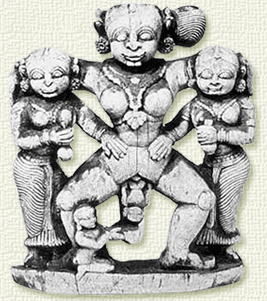
birth.gifIn Feri, Sex is considered the life force that connects all living things, and it is the origin of the universe (not just genital sex, but it includes that, too). Sex is not always about procreation, rather it is about creation of all kinds, be it of another human being, a work of art, a good orgasm, or an ecstatic experience. In Feri, there is no shame in sex- and there is no guilt, either. Sex is a good healthy thing, when consensual.
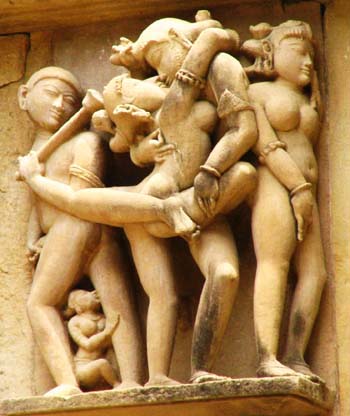
But I know that other religions have their issues with sex for whatever reason and often have prohibitions on what kind of sex one is allowed to have (if any), when you can have it, and with whom. That is why I am glad to be in a class with people from diverse religious and cultural perspectives. I am glad to see that future clergy of many denominations and traditions will be sex positive.


As a future priest and present parent, the messages that I transmit about sex to those around me matter. Sex is a normal bodily function and a part of creation. I want my son growing up embracing his human birthright to have sex and hold it as sacred, as a gift.  I want him to get pleasure from his body as is his right. I want him to know the names of all his body parts, and the names of other body parts he does not possess. As a young girl, I was not told the names of all my body parts, and had to learn about sex mostly on my own. I already have a great children's book for Rowan when he gets a little older called a Kid's First Book About Sex. He will learn anything he wants to know, and he will get information without having to ask. Teaching him about sex will be like teaching him about art, math, or insects. It is a commonplace thing, and happens to almost everyone in their life.

About the class (from the syllabus):

If we want to bring our whole selves into connection with Spirit, we can’t forget our sexual selves. In this class, we will explore the effects of erotophobia on sexuality and, by extension, spirituality in order to discover how we can integrate these foundational aspects of our humanity. Some topics we will discuss include: sexual well-being, the effects of shame on relationships, sexual diversity, how our sexual selves can inform our spiritual practices, and the dance between boundaries and connection with others. The class will include lecture, interactive exercises, group discussion, and personal reflection in order to offer a range of perspectives and experiences.

erotic-india-sex.jpeg
Course objectives: By the end of the course, you will be able to:
  • Discuss how sexual well-being, shame and interpersonal boundaries influence and are influenced by their relationships with the Divine.
  • Identify and commit to at least one step they can take to deepen their understanding of sexual diversity and overcome erotophobia.
  • Explore ways in which their personal sexualities can both inform and hinder their roles as ministers.

Sound good? So far, it is! My professor for the class is an old friend, actually- Charlie Glickman. We worked together at Good Vibrations, among other things, back in the day.

I'll be journaling for the class and posting some of those entries here. For homework for our first class, he asked us to write about this:
What messages have you received about sex and spirituality? How have those messages shaped your studies? Your spiritual journey? Your daily life?


Interesting questions for me to ponder. How about you?


If all goes according to plan, I should become a better, more creative writer in the next 14 weeks: "Writing the Rites" is my way of getting up to snuff in the writing department.

Technically, it is a liturgy writing class for wannabe Unitarian Universalist ministers. But what is liturgy if not creative writing for religious thinkers? And not just "the big 5" have liturgy. My religious tradition has gorgeous liturgy written by poets more talented in that arena than I. But I aspire, and in order to succeed, work is to be done! We will be writing as a daily practice, checking in with a writing partner weekly on top of class time, and checking in monthly with the professor about our journaling. I am looking forward to honing my skills!

We started the class by doing some automatic writing and (gulp) sharing it in front of the class - twice. I took a chance and made myself vulnerable, exposing personal details about my life. It's going to be an interesting semester, I think!

From the syllabus:
I. Description:
This course will provide religious leaders with tools to create meaningful, multi-vocal worship in the UU congregational setting. In class and in the community we will be creating and leading traditional and transformational worship for people at all ages and stages. Students will gain and understanding of the psychology and spirituality of ritual and liturgical forms within an historic context. In addition to the Sunday service, we’ll create a calendar and write ceremonial rites to prepare for the leadership of weddings, memorials and other special religious occasions.
II. Course Aims and Learning Objectives:
Aims
This course will include a lot of writing. In and between sessions students will be writing for the various elements that make up Sunday services, and traditional rites of the Unitarian Universalist community. Students will explore the necessary rhythms of writing for professional sustainability.
Students will share their writing with others and be expected to offer, and receive, affirmation and critique. We will create a community of hope expressed in written and spoken words.
Learning Objectives:
By the end of this course, students will: •Have a portfolio of writing samples for various religious
occasions; •Understand the history and intentions of various liturgical rites and
increase in their confidence and ability to lead congregations
through familiar and new rituals; •Be able to adapt written material from a variety of sources with
attention to the integrity of the original and the issues of
appropriation and fair use; •Find meaningful tools for incorporating writing into a public and
pastoral ministry.
I'm looking forward to creating some gorgeous litugy for Feri rituals in this class!

Saturday, August 21, 2010

Teaching Children the Craft: Growing Up With A Magic(k)al Worldview (Part One)

"Disbelief in magic can force a poor soul into believing in government and business." - Tom Robbins
Recently, I was having a conversation with my Faery teacher about "magical thinking". To me, it is a positive thing. Having a magical mindset means that you understand that your actions and words have a great impact on the world(s) and that you can affect change. It means cultivating the ability to make that change count- doing your Work in the world. But she reminded me gently that term is used by those that would use my religious worldview against me- to call me crazy and even use it to thwart my autonomy. (Crossing the line too often in public or challenging the status quo with my worldview could wind me up in an institution!)
There are others in this world who have defined this phrase, "Magical Thinking" for me- and it is not a flattering picture. As one can imagine from a definition used by Richard Dawkins (and the rest of the fundamentalist atheist movement) and the warped psychologists who created the DSM (the very same folks who demonize trans gender expression and gate-keep its treatment; the same folks who until very recently classified homosexuality and bisexuality as a mental disorder; and the same folks who classify perfectly consensual sexual behavior among adults that is unusual as a type of "paraphilia"), "Magical Thinking", in their view, means that I suffer from delusions:
Magical thinking: A conviction that thinking equates with doing. Occurs in dreams in children, in primitive peoples, and in patients under a variety of conditions. Characterized by lack of realistic relationship between cause and effect.
Yaqui Deer Dancer
Anyone else see huge gaping problems with this definition? Shall we start with the overt racist/xenophobic bias against every indigenous religion on the planet?

Or that this definition is so overly broad that it encompasses any religion that believes in prayer or god(s)? (Hear that, Abrahamic religions? It's not just the crazy witches that they are after!)

We should probably acknowledge the paternalism (gendered word selected intentionally here) of (outdated) science run amok as well.
When I say outdated, I mean it. The folks who write the DSM are like Isaac Newton in their scientific view of the world*, whereas my religious tradition, Faery Witchcraft, is more like Steven Hawking.  There is nothing so far in quantum mechanics/physics that has contradicted my religion’s theology. And it turns out that many shamanic cultures and worldviews are finally being vindicated by this science. If anything, Faery is just a more poetic expression of what these scientists are discovering for themselves (because they were not going to take my religion’s word for it!). 

When I read physicists like Neils Bohr, Nikola Tesla***, and Werner Heisenberg , they do not contradict my religious worldview, quite the contrary.** Not all of them are as poetic as Albert Einstein though:
"Everything is determined, the beginning as well as the end, by forces over which we have no control. It is determined for insects as well as for the stars. Human beings, vegetables, or cosmic dust, we all dance to a mysterious tune, intoned in the distance by an invisible piper."

A card given to me by Eldri Littlewolf, a Feri elder.
That is not to say that my religion has all the answers. But unlike the old Newtonian scientific worldview (that rejects what it cannot see in order to prove), the new scientific view  and one of Faery embraces paradox.

So... how does this all tie together into a coherent theology that I am transmitting to my son? For that, dear reader, you must stay tuned for part two!


*(Although I know many "hard scientists" (biologists and chemists) who complain that psychology is a "soft science" at best, non-science at worst. And don’t get them started on when those soft science psychology folks try and bolster their arguments with hard science without doing proper research! Man, do biologists HATE evolutionary psychologists! I was married to a biologist for 10 years; so I have been privy to these discussions, believe me!)

** In Newtonian physics, particles - like billiard balls - were seen as hard, individual objects, specific to a particular space and time. On the other hand, waves - such as ocean waves or sound waves - were spread through space and time, blending and interpenetrating with each other. The two, particles and waves, were seen as completely different concepts.

This common-sense notion got turned on it head by quantum physics, which developed at the beginning of this century to account for the behavior of atoms and light. What was found then - and has since been confirmed by almost a century's worth of experimentation - is that the basic building blocks of the physical world (such as atoms, electrons, protons, light) behave in some situations like waves and in other situations like particles. The inescapable result is that in some mysterious way, they are both.

*** Did you know that most of Tesla’s amazing discoveries and inventions came to him, verbatim, in dream? How very shamanic!